Oilseed rape: a promising season so far – keeping the basics right

Anna Bromley
May, 14 2026This season has delivered some of the strongest-looking oilseed rape (OSR) crops we’ve seen for a while, with strong autumn establishment, good spring growth, and plenty of ‘corner-to-corner’ flowering. A combination of kinder establishment conditions, leftover nitrogen residues, and more considered cabbage stem flea beetle (CSFB) husbandry has helped set crops up well. The key now is not to relax and to maintain high standards through the rest of the season and into next autumn to prevent CSFB pressure from rebuilding.
This Season
This year’s OSR is now coming towards the later stage of flowering, and at this stage there is relatively little left for us to influence yield potential. Any further intervention to the crop will be measured and need‑led.
The strength of the crop at flowering largely reflects decisions made much earlier in the season. Crops were established well, benefitting from good seedbeds and timely operations. Following last year’s dry conditions, there also appears to have been a higher level of residual nitrogen in the soil, which helped give OSR a strong early start and supported rapid autumn development.
CSFB pressure has also been lower than in some previous seasons. This is likely influenced by the reduced area of OSR grown in recent years, which appears to have helped suppress populations, alongside more considered crop placement and establishment strategies. As a result, many crops are now well structured as they head towards harvest.
Looking Ahead to Autumn
With OSR showing renewed promise this season, it is likely that more farmers will look again at growing the crop ahead of autumn drilling. While that restored confidence is understandable, it also brings risk. Experience has shown that increasing area without the same attention to detail can quickly lead to a rebuild of CSFB pressure.
The focus therefore needs to remain firmly on how OSR is established, rather than simply how much is grown. Establishment fundamentals, appropriate field selection, realistic drilling windows and moisture availability will continue to play an important role in reducing risk.
Much of the learning from recent seasons is now being brought together through the United Oilseeds OSR Reboot programme. Ceres Research has been actively involved in this programme alongside several industry‑wide groups they have identified 10 Shared Strategies for OSR Success, as seen in the table below, drawing on research, trial data and real on‑farm experience to reduce CSFB risk and improve establishment resilience.
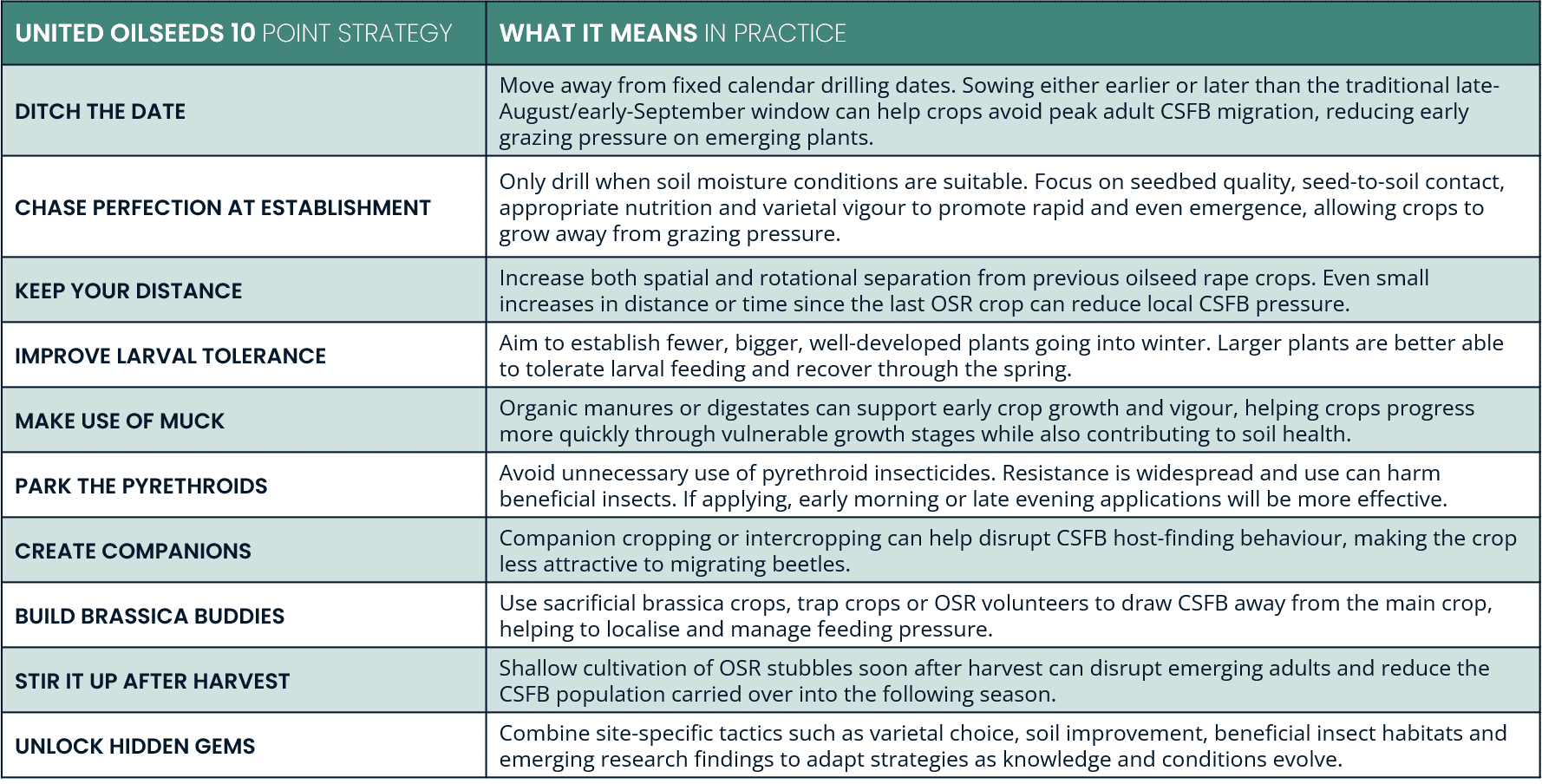
Source: Top 10 cabbage stem flea beetle (CSFB) management strategies for oilseed rape | AHDB
Performance & Benchmarking
Insight from the Ceres Rural benchmarking service also supports the renewed interest in oilseed rape. Using grower‑led benchmarking data, we compare on‑farm performance against wider industry figures such as those published by AHDB. Within our benchmarking group, OSR was the strongest‑performing break crop last season, with an average gross margin of around £1,200/ha,
This compares well with AHDB figures of £1,350/ha for OSR and £1,100/ha for wheat, reinforcing that where OSR is well established and managed, it can be a highly competitive option within the rotation. Farmers interested in understanding how their own performance compares, or in setting up a local benchmarking group, please speak to your local Ceres Rural Farm Consultant, or get in touch here.