The UK–EU SPS agreement: what it means for farms & estates

Richard Means
Nov, 25 2026On 20th November 2026 the UK and the EU concluded a Sanitary and Phytosanitary (SPS) Agreement, and it will apply from 1st March 2028. It is the biggest change to the rules around food and farming trade since Brexit.
Most of the headlines have been about the border: fewer certificates, fewer checks and lower costs for exporters. That matters. But the agreement also changes rules on farm, including which pesticides can be used, and it will affect businesses that never sell a tonne abroad.
Here is what was agreed, the dates to plan around and what the team at Ceres Rural is watching.
What was agreed
The agreement creates a Common SPS Area between the UK and the EU. In practice, both sides will apply the same rules, at the same time, on an ongoing basis. This is known as dynamic alignment.
The rules in scope go well beyond border paperwork. They cover animal and plant health, food and feed safety, animal welfare, organics, labelling and marketing standards, and pesticides and biocides. Wine and spirits are not covered.
The UK will not have a veto over future EU rules, but the Government says it will have an early role in shaping them. Nothing changes immediately. Current UK requirements apply until 1st March 2028, and that date is subject to UK and EU procedures.
What changes at the border
For businesses trading with the EU, the Government says the agreement will remove:
- Export Health Certificates for most trade between Great Britain and the EU, which can cost up to £200 per consignment.
- Phytosanitary certificates, saving around £25 per certificate and at least £127.60 per load in inspection fees.
- Routine SPS border checks on goods such as dairy, fish and meat.
- Certificates of Inspection for organic products.
It also reopens the EU market for British seed potatoes, fresh sausages, burgers and molluscs. The same easing extends to goods moving from Great Britain to Northern Ireland.
The prize is real. UK agri-food exports to the EU have fallen by 32.5% since 2019, on Government figures. But the door opens both ways, so EU produce will also reach UK shelves with less friction.
What changes on farm
This is where the agreement reaches businesses that do not export. Defra is clear that domestic rules are affected too, so a farm selling only into the UK market may still need to make changes.
Crop protection
From 1st March 2028, Great Britain will follow EU decisions on active substance approvals and maximum residue levels. The 2027 growing season is unaffected. After that, how long a product stays available depends on its status:
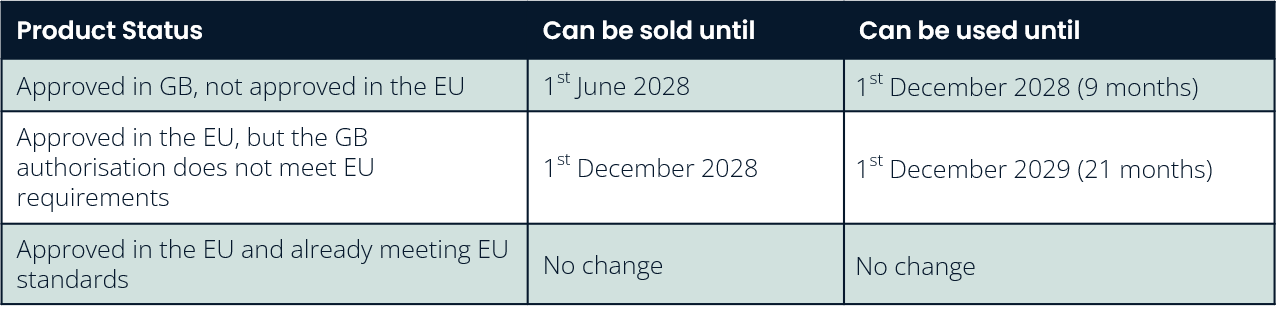
Three newer actives approved in GB but still awaiting an EU decision (cinmethylin, pydiflumetofen and isoflucypram) can stay on the market until the EU decides.
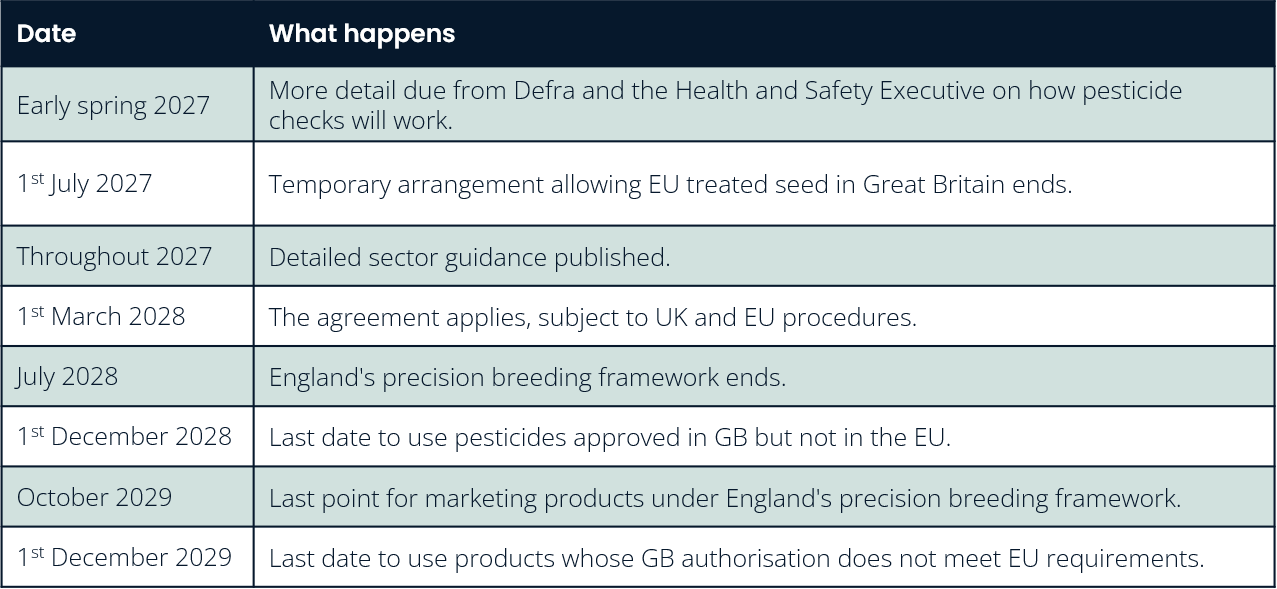
Crops treated in line with current GB rules can still be harvested and sold on the GB market after the agreement applies. They cannot be exported to the EU if they do not meet EU requirements. Treated seed needs attention sooner: the temporary arrangement allowing EU treated seed in GB ends on 1st July 2027.
The Health and Safety Executive has not yet said which products fall into the 21-month group, so there is no action to take on those yet.
Livestock
Defra expects changes to animal identification, holding registration, movements and disease reporting, as well as to veterinary medicines, feed additives and disinfectants. The detail is still to come. The UK keeps its ban on live exports for fattening or slaughter.
Organics
Organic poultry producers have a 12-month transition, after the agreement applies, for changes to housing requirements and organic egg production.
Precision breeding
England’s precision breeding framework stays in place until July 2028, when the EU’s own rules for new genomic techniques in plants take effect. Products can continue to be marketed under the English framework until October 2029.
The dates to plan around
Six things farms and estates need to watch
- Import competition. More EU food reaching UK shelves with less friction.
- Pesticide availability. Which actives and products stay approved in Great Britain, and how that changes rotations and margins.
- Precision breeding. England’s framework runs to July 2028. What follows will depend on the EU’s own rules.
- Future EU rule changes. Dynamic alignment means Great Britain follows EU rules as they evolve, not just as they stand today.
- Cost of adjustment. Time, guidance and investment where the rules differ, from stores and records to labels and housing.
- Export opportunity. Fewer checks, certificates and border requirements, and markets reopening for some products.
What to do now
There is no need to change anything on farm today, but there is useful groundwork to do over the winter:
- Ask your agronomist or supplier which products in your programme could be affected.
- Avoid overstocking products that may be withdrawn, and keep them clearly identified in store.
- Check the status of treated seed before you buy, especially for the 2028 season.
- Keep treatment records up to date, and check residue and export requirements before treating crops bound for the EU.
- Think about where easier trade could open a market for you, and where more imports could put pressure on one.
The National Farmers’ Union has welcomed the transition periods, and its president, Tom Bradshaw, has said that reaching the agreement “is only the beginning”. We agree. A good deal of the detail will arrive through legislation and sector guidance during 2027.
Our team is working through that detail as it is published. If you would like to talk through what the agreement means for your farm or estate, please get in touch with your usual Ceres Rural contact.