Farm diversification: what could your land earn, and how quickly?

Andrew Atkinson
Oct, 12 2026Diversification is now part of the conversation on most of the farms we work with. With the phasing out of direct payments and ongoing pressure on margins, many farm businesses are looking at what else their land and buildings could be doing.
The ideas are rarely the problem. Most landowners can name a corner of the yard, a redundant building or an awkward field that could earn more. What is harder to judge is which idea is worth the investment, and how long it will take to get the money back.
To help with that first conversation, we have set out eight common diversification options side by side. For each one we have looked at the likely investment, the return it could generate and the payback period you might expect.
At a Glance
The quickest returns come from the lowest-cost options. A dog walking field or pop-up campsite could pay back within a year, while padel courts and solar can take three to six years.
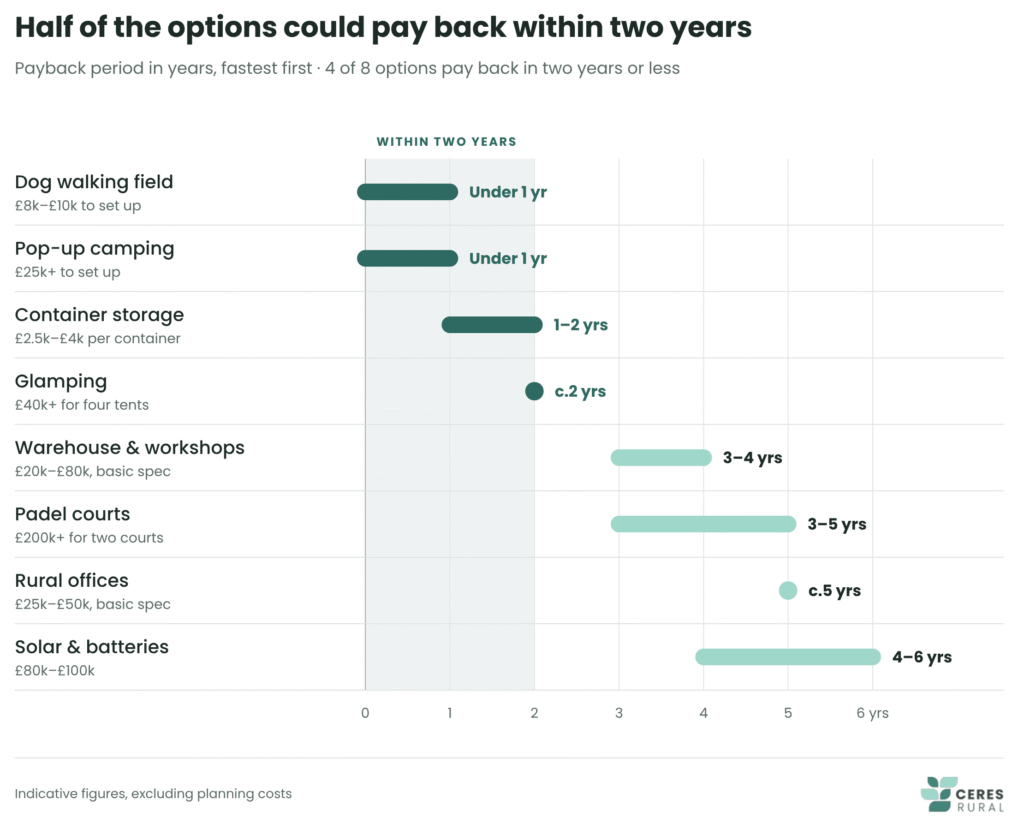
The options are covered below in the same order.
Lower Cost, Quicker Returns
Four of the options could pay back within around two years. They need less capital, use land or space that is often underused, and can usually be tested before committing further.
Dog Walking Fields

A securely fenced field that dog owners book by the hour online. Set-up costs of around £8,000 to £10,000 cover fencing, gates, parking and a booking website. At £12 a session and 80% occupancy, a field could take up to £3,500 a month, so payback within a year is possible on these assumptions.
They work best on marginal land close to a residential area. Bookings drop in poor weather and over the winter, and the field will need regular mowing and bin emptying.
Pop-up Camping
Temporary campsites can open for up to 60 days a year under permitted development rights. Facilities, groundworks and a website cost from around £25,000, with staff from around £500 a week while the site is open. A site of 49 pitches at £45 a night and 75% occupancy could turn over around £99,000 across the season.
The best sites are near a village pub and shop, but not on their doorstep. Returns can be strong, but the site needs daily management while it is open, and public access brings its own security considerations.
Container Storage
A redundant corner of a secure yard can provide a steady rental income with very little management time. Containers cost around £2,500 to £4,000 each and typically let for £120 to £200 a month plus VAT, giving a payback of one to two years, potentially within 18 months.
A site close to a main road will let more easily. Containers do take up yard space and bring more activity onto the farm, and business rates are payable.
Glamping
Glamping works under the same 60-day rules as camping, but with fewer guests paying more. Four bell tents with facilities and groundworks cost from around £40,000. At £175 a night and 75% occupancy, each tent could turn over around £7,500 across 60 days, with payback in the region of two years.
There is less to manage than a full campsite, and demand remains strong. It still needs daily attention, though, and overall turnover is lower.
Making Better Use of Farm Buildings
Redundant buildings are often a farm’s most underused asset. Converting them takes more investment, but the income tends to be steady and the ongoing management light.
Warehouse and Workshops
A steel portal frame building can be converted into storage or workshop space, potentially under Class R permitted development. A basic specification in an existing building costs around £20,000 to £80,000, with rents of around £54 to £129 per m² per year. Payback is typically three to four years.
Large buildings near major roads are best placed. Expect more vehicle movements, and business rates will apply if units sit empty.
Rural Offices
Converting redundant farm buildings into offices for smaller local businesses costs around £25,000 to £50,000 for a basic specification. Rents of £150 to £250 per m² per year, depending on the finish, give a payback of around five years.
Offices suit sites with good road access, parking and village amenities nearby. Smaller firms tend to make good tenants, and activity is usually limited to office hours. There will be more traffic and upkeep, and business rates if units are empty.
Larger Investments
The last two options need the most capital up front, but they bring either year-round visitors to the farm or a lasting cut in its own running costs.
Padel Courts

Padel continues to grow quickly in the UK, and a converted barn can house indoor courts that play all year. Two courts plus the barn conversion will cost from around £200,000. At £30 an hour per court and 75% occupancy, turnover could reach around £135,000 a year, with payback in three to five years.
An alternative is to let the courts to an operator, typically for £9,000 to £10,000 per court plus a share of the profit. A quality barn 6 to 8 metres high, near more affluent areas, is ideal. Padel brings visitors who often use other businesses on site, but the upfront cost is high, and there is planning risk, local competition and hands-on management to consider.
Solar and Battery Storage
Large, south-facing roofs with minimal shading can be put to work generating electricity for the farm. Panels and batteries cost around £80,000 to £100,000 and could return £5,000 to £20,000 a year, with batteries allowing 60 to 80% of the power to be used on site. Payback is typically four to six years, and panels qualify for capital allowances.
Solar uses existing buildings and keeps land in production. Returns depend on high on-site use, though, and grid limits can restrict how much is exported.
Before You Start
The figures above are indicative and exclude planning costs. Every site is different, and a few points are worth considering early on:
- Some options can use permitted development rights, but many will need a full planning application. The cost and timescale of that should be built into any business case.
- Business rates. Most commercial uses will attract business rates, including on units that sit empty between tenants.
- Road access, nearby villages and the local population matter as much as the land or building itself.
- Management time. Some options run themselves once set up, while others need someone on site every day. Be realistic about who will do it.
- Existing agreements. Check how a change of use could affect any tenancy, environmental scheme or other agreement already in place on the land.
How Ceres Rural Can Help
Every farm is different, and so is the right opportunity. The best option for one business may not suit the next, even a few miles down the road.
Our team can help you weigh up which options suit your land, buildings and location, test the numbers against your own circumstances, and work through what it would take to make them happen, from planning through to the business case.
Whether you are just starting to explore diversification or already have a project in mind, please get in touch on 01223 679 679 or at contact@ceresrural.co.uk.