RPA Site Visits & Compliance Checks

Sam Clegg
Sep, 24 2026RPA inspections and compliance checks are a routine part of Countryside Stewardship (CS), Sustainable Farming Incentive (SFI) and Capital Grant agreements. Whilst being selected for a site visit can sometimes feel daunting, inspections are not uncommon and are an established part of scheme administration. Taking a proactive approach to record-keeping throughout the year can help ensure that, if an inspection does occur, the required information and supporting evidence are readily available. Well-organised records can reduce delays during the inspection process and help minimise the risk of deductions or issues relating to scheme payments.
The guidance below outlines what agreement holders can typically expect during an inspection, the records that should be available, and some common compliance issues to be aware of across CS, SFI and Capital Grant agreements.
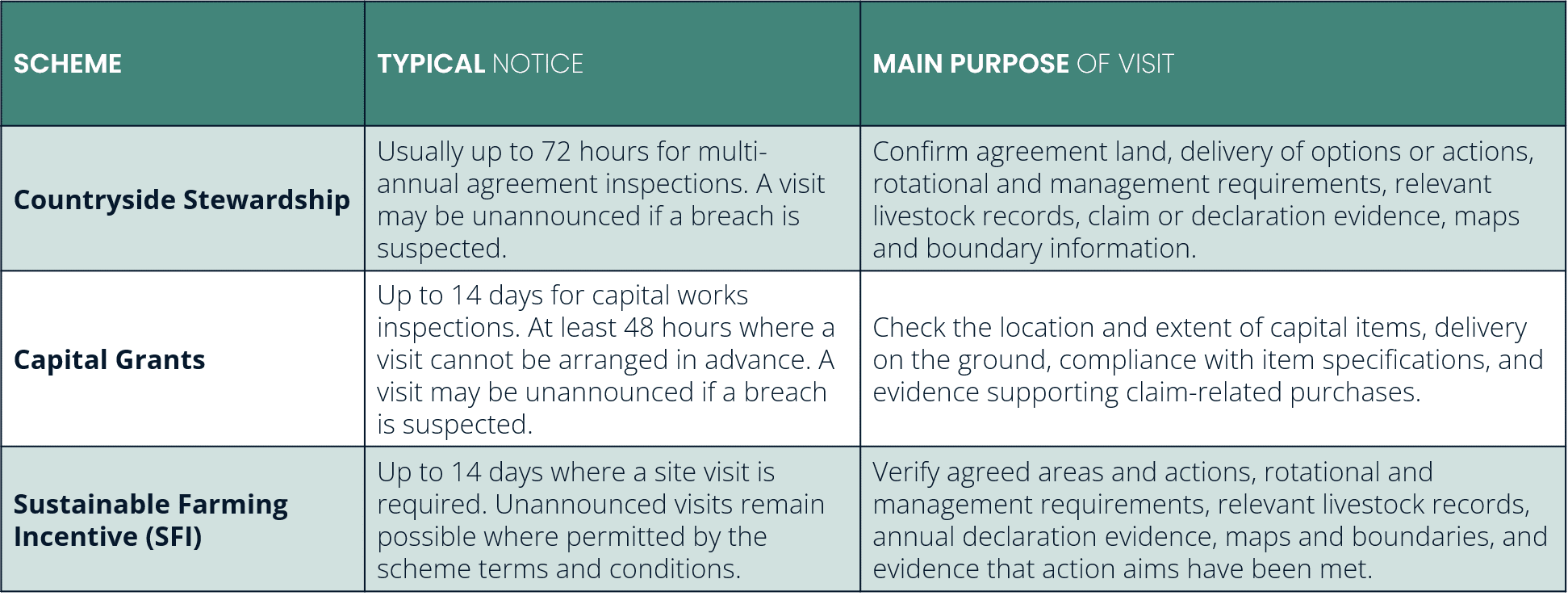
1. At-a-glance Comparison
The table below summarises the main differences in notice periods and the focus of a site visit.
2. Advice That Applies to all Three Schemes
Preparing For a Site Visit
RPA will generally seek to arrange a suitable date and time. Visits are most efficient when agreement information and supporting records are complete, organised and readily accessible.
Therefore, you should ensure:
- Keep agreement documents and schedules together.
- Maintain farm maps that clearly show relevant options, actions or capital items.
- Keep copies of claims, declarations and correspondence, as applicable.
- Retain invoices, receipts and contractor records.
- Take dated photographs showing establishment, works in progress, and management activity.
- Record management operations as they occur, including dates and locations where relevant.
- Keep land parcel and boundary information up to date.
- Notify RPA promptly of changes that may affect delivery of the agreement.
What Officers May Check
Across the schemes, officers may compare the agreement and supporting evidence with what is present or taking place on the ground. This can include the location and extent of the agreement area or item, delivery against requirements, mapping and land parcel information, and evidence used to support claims or declarations.
Common Compliance Issues
- Incomplete or missing supporting evidence.
- Records not being retained or organised appropriately.
- Actions or options not being delivered according to specification.
- Land parcel information not matching activity undertaken on the ground.
- Capital items not being installed to the required specification or maintained for the required period.
- Failure to update RPA about relevant changes affecting the agreement.
Record Retention & Ongoing Obligations
Records, invoices, receipts and supporting documentation must be retained for at least seven years after the agreement ends, or for the period specified in the relevant scheme terms and conditions. During that period, records may still be requested for compliance, audit or assurance activity.
For Capital Grants, items must remain in situ and be maintained to the specification set out in the agreement for five years.
3. Scheme-Specific Advice
Countryside Stewardship Agreements
In addition to the records above, you should have the following available where relevant:
- Seed invoices and habitat establishment records.
- Livestock movement and grazing records.
- Evidence supporting claims or annual declarations.
- Records covering rotational options and management requirements.
Capital Grants Agreements
In addition to the records listed applied across all schemes, you should have the following available:
- Photographic evidence of works in progress.
- Operations records showing dates of completion.
- Evidence that each capital item meets the required specification.
- Evidence supporting purchases relating to claims.
Sustainable Farming Incentive Agreements
SFI agreements may be monitored through site visits, administrative checks, remote monitoring and evidence reviews. In addition to the common records above, have the following available where relevant:
- Seed invoices and habitat establishment records.
- Livestock movement and grazing records.
- Soil analysis reports required by the agreement.
- Records showing management operations, including dates and locations.
- Evidence showing that the aims and requirements of each action have been met.
4. Practical Pre-visit Checklist
- Agreement and schedules available
- Current maps ready
- Claims, declarations and correspondence filed
- Invoices, receipts and contractor records retained
- Dated photographs organised
- Grazing, livestock and management records up to date
- Scheme-specific evidence available
- Any relevant changes reported to RPA
If you’re preparing for an inspection, considering an application, or would like advice on meeting scheme requirements, our team is here to help. Get in touch to discuss your situation and explore the support available.